Words by Ben Raven. Photos by Eugene Onegin, Raul Torrero.
For the first in our new series of interviews where artists talk about what it's really like to be a DJ, we speak to vinyl house star Julian Perez about how he selects records, what happens when the crowd aren't happy and the challenges of staying mentally strong.
Julian Perez knows a thing or two about keeping your head. The Ibiza-based Spanish DJ ran one of the hottest vinyl labels, Fathers & Sons Productions, in the early 2010s but right at the peak of the label's success, he decided to end on a high and made his debut album, Solemnity, the twelfth and final release. As a DJ, he's a renowned vinyl aficionado and a highly in-demand touring act.
Where do you get your music from?
"I'd say I get more than 70% of the stuff on Discogs. It's more expensive this way but it's hard to find the stuff I'm looking for by checking only new records at online stores. Plus, to seek and find un-hyped gems, Discogs is the place."
Spending hours digging and getting lost in local stores around the globe is way more fun than digging on a computer. The list is endless but some of my favourites are: Technique in Tokyo, Gramaphone Records in Chicago, Subwax BCN in Barcelona, GOSU in Frankfurt, Disk Union Shibuya in Tokyo, Rush Hour Records in Amsterdam, Palma39 in Madrid, The Thing in Brooklyn, A-1 Record Shop in New York and The Ghost in Berlin.
You said you don't prepare your sets, but what are you doing in the lead up to a gig?
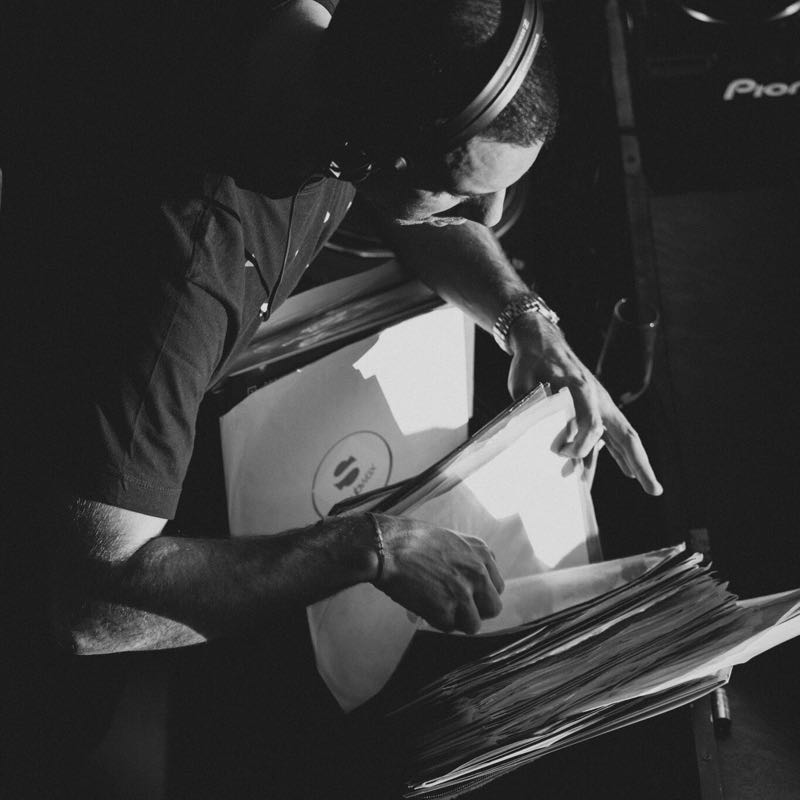
I find it stressful to prepare a set when you are never sure how the party/crowd is going to be. When I'm playing gigs very often and having short periods of time between tours, I make a pile with the latest purchases I'm looking forward to playing. Then, I go through my collection and find some records I haven't played lately but I know I haven't heard them around for a while, and I put them to one side.
Next, I open my bag with the music from the last gig and I go through all the records in there, at the same time thinking about the parties I'm playing next and visualizing what their vibe will be. After that, I just need to leave out the ones I feel I've been playing too much lately, and leave space for the other two little piles to join the bag. Sorted!
Do you ever mix at home?
I'm not really mixing at home these days. I do have a setup and I can record some podcast from time to time but it's mostly for friends or at after parties. There's a turntable in the studio where I listen to my records but I leave the mixing for the gigs. I've never practiced combinations to play them in a club in the same order. Would DJing be exciting if I did so?
What important lessons have you learned over time that have made you a better DJ?
An important lesson is to overcome your ego. Satisfying yourself or certain people you want to impress is indulging your ego.
These days DJs experience a lot of criticism when performing in front of others. There's a lot of judging going on that can easily make you pay less attention to the public in front of you — the people who came to listen to you and are whom this is all about. They are open to what you have chosen in that moment, so it's important to play in a way that lets you take them along on the story you're telling.
Do you prepare your music differently for different times of night or crowds?
How I'm feeling the dancefloor is more important than what slot I'm in. My mood will also play an important role in how I develop my set. I'm not a fan of a steady, fixed sound in sets. I keep driving them up and down to keep the vibe and having enough versatility to avoid being predictable.
If I need to play a harder set for a bigger event, it'll still be my sound, but just harder than usual. The key is to keep the flow with your signature style either for a small club with 100 people or for an open air with 3,000 people.
How do you deal with the pressure of defining your sound?
"My sound is a combination of my roots and all the influences I'm discovering along this journey. It keeps building, developing and refining. I truly never think about it as an issue. If you were to ask me to describe it in words, I wouldn't be able to. It's a combination of different styles that gives personality to my sound."
Would you describe yourself as confident or an over-thinker?
Over the years I've become confident enough and I'm rarely letting the little imperfections in my DJ sets get me. Come on, we are not synchronized machines! I always take DJing very seriously and give my best, trying to improve, challenge and surpass myself without being too critical.
"I'm from the side of the fence that would rather work hard on improving my flaws than moaning the day after the gig."
If you find yourself booked to play the wrong kind of crowd, do you compromise or go down in flames?
If you get booked for a party with the wrong crowd, no matter if it's the promoter's or your agent's fault, your task is to make that crowd have a great experience without compromising your sound. That's when your experience and ability as a DJ comes to the fore and you must do the magic.
"You go and work your ass off to take them on a music trip. It's not the set you had in mind, it's a difficult crowd but you have the skills to go through your music and build a set for them by reading their faces but also showing them your identity. There's no time for excuses."
It's like, when there aren't many people at your gig, but there are some people there for you — they deserve to hear you give your best. You have to show respect to those people and play like you have a full house.
How do you handle things when something goes wrong in the middle of a set?
Problems with sound systems and setups still bother me most these days. Bad quality monitoring, incorrectly set up DJ booths on top of the subs or tables that aren't stable enough for spinning records are the most common problems.
Original article
